Understanding EU CBAM default values is critical if you export steel, aluminium, cement, or fertilizers into the European Union, as 2026 is the year CBAM becomes a direct expense on your balance sheet.
During the rollout phase from 2023 to 2025, using EU default values to estimate your carbon footprint was completely fine. Nobody had to pay real money. But starting January 1, 2026, the EU shifted CBAM into its financial phase. Every single tonne of embedded carbon in your imported goods requires a paid CBAM certificate.
Using EU default values is no longer a convenient shortcut. It is an intentional financial penalty.
If your business hasn’t set up a system to measure and verify actual facility emissions, you are paying extra carbon taxes that could easily be avoided.
Why Using CBAM Default Values Is a Costly Trap
The European Commission designed EU CBAM default values with a clear goal to penalize companies that do not report primary carbon data.
Instead of giving exporters a fair regional average, default figures reflect the emissions of the world’s highest-polluting, worst-performing plants. To make matters worse, the EU adds an escalating penalty markup on top of those numbers every year.
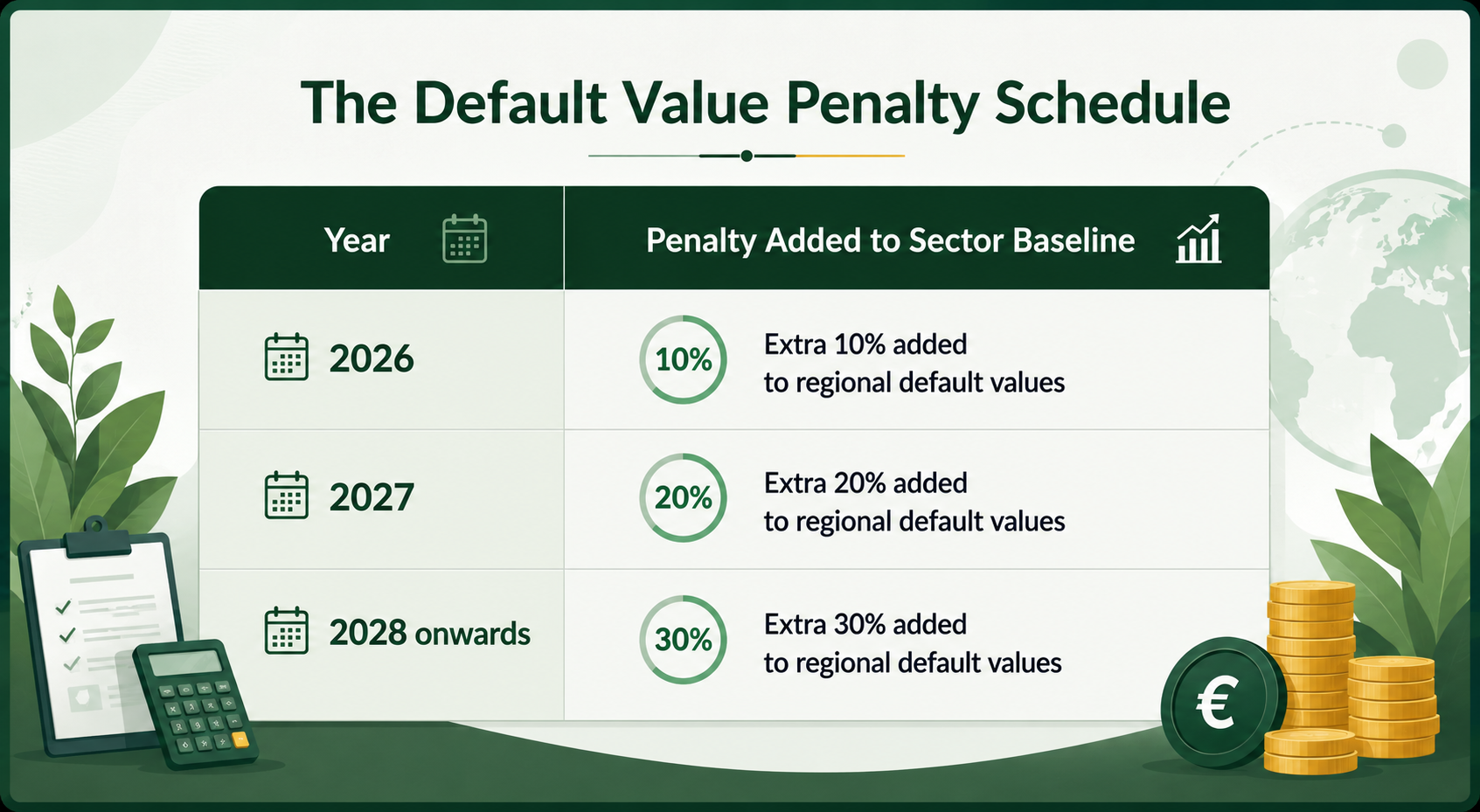
Relying on default numbers in 2026 means paying for your baseline carbon emissions plus an extra 10% penalty fee. By 2028, that penalty jumps to 30%.
Default Values vs. Actual Emissions: Side-by-Side
| Feature | Using Default Values | Reporting Actual Emissions |
| Data Source | Benchmark of worst-performing global facilities | Primary data from your actual facilities & energy source |
| Audit Mandate | None | Mandatory annual audit by an EU-accredited verifier |
| Penalty Markup | 10% extra in 2026 (30% extra by 2028) | 0% penalty (pay strictly for what you emit) |
| Local Carbon Tax Credit | Nearly impossible to claim | Full deduction for local carbon taxes or ETS fees paid |
| Buyer Impact | Importers pay higher taxes and look for cheaper suppliers | Importers pay lower taxes and prioritize your contract |
How CBAM Costs Are Calculated (Without the Complex Math)
Your total CBAM bill comes down to four basic factors:
- Your Shipment Volume: Total weight of goods in tonnes.
- Your Carbon Intensity: Embedded carbon per tonne.
- The EU Carbon Price: The current market rate for EU carbon allowances.
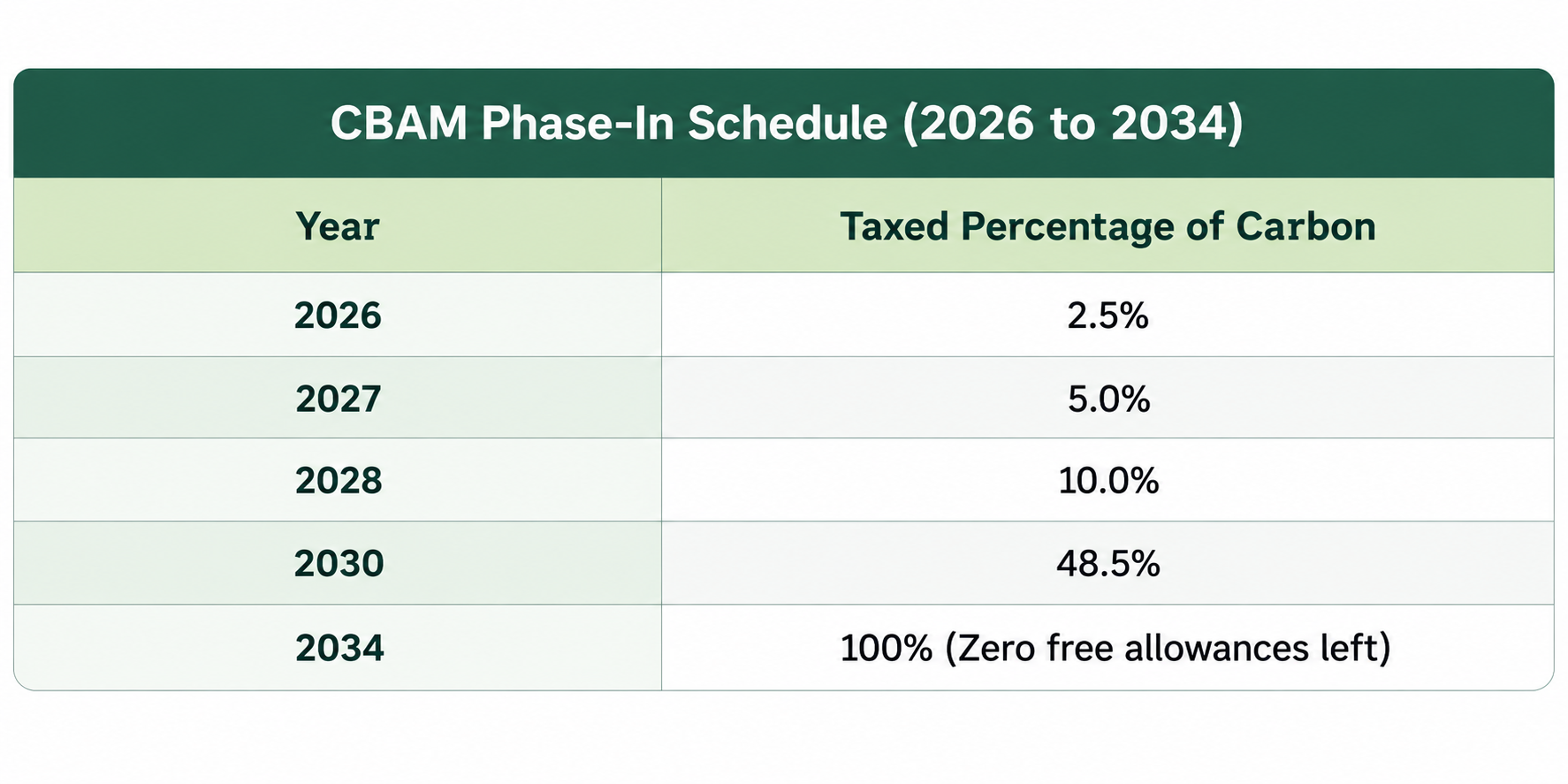
- The Phase-In Factor: The percentage of carbon that gets taxed each year.
Real Industry Savings: How Much Do Exporters Keep?
Example 1: Steel Slab Exports (10,000 Tonnes)
Let’s look at an exporter shipping 10,000 tonnes of steel slab to an EU buyer (assuming an EU carbon price of €75 per tonne):
- Using Default Values: The regional default value is 3.167 tonnes of CO2 per tonne of steel. Add the 10% penalty markup for 2026, and your assessed carbon jumps to 3.483 tonnes of CO2 per tonne.
- 2026 Default Tax Bill: €65,319
- Using Verified Actual Emissions: An efficient mill running an Electric Arc Furnace or clean energy setup routinely achieves actual emissions of 1.800 tonnes of CO2 per tonne.
- 2026 Actual Tax Bill: €33,750
- Your Direct 2026 Savings: €31,569 (a 48% tax cut) on just 10,000 tonnes.
What happens by 2030 (when the tax rate hits 48.5% and default penalties hit 30%)?
- 2030 Default Tax Bill: €1,497,598
- 2030 Actual Tax Bill: €654,750
- Your 2030 Annual Savings: €842,848 per 10,000 tonnes!
Example 2: Portland Cement Exports (50,000 Tonnes)
For a cement producer exporting 50,000 tonnes to European customers:
- Default Value (with 10% penalty markup): 1.742 tonnes of CO2 per tonne of product.
- 2026 Default Tax Bill: €163,350
- Actual Verified Emissions: 0.880 tonnes of CO2 per tonne (achieved through modern clinker substitution).
- 2026 Actual Tax Bill: €82,500
- Your Direct 2026 Savings: €80,850 in cash retained immediately.
The Commercial Risks of Doing Nothing
Relying strictly on EU CBAM default values creates severe commercial risks for global exporters:
- EU Buyers Will Pass the Costs to You: EU importers pay the CBAM tax at customs. If your default numbers increase their tax bill by €80,000, they will demand a discount on your product price to make up for it.
- You Lose Credit for Local Carbon Payments: If you pay carbon taxes, fuel levies, or local ETS fees in your home country, you cannot deduct those payments from your EU CBAM bill unless you provide verified actual emissions.
- Precursor Chain Disruptions: If you export finished goods, you need carbon data from your suppliers (precursors like raw iron or clinker). A single supplier using default values can ruin your whole calculation and trigger penalties across your entire shipment.
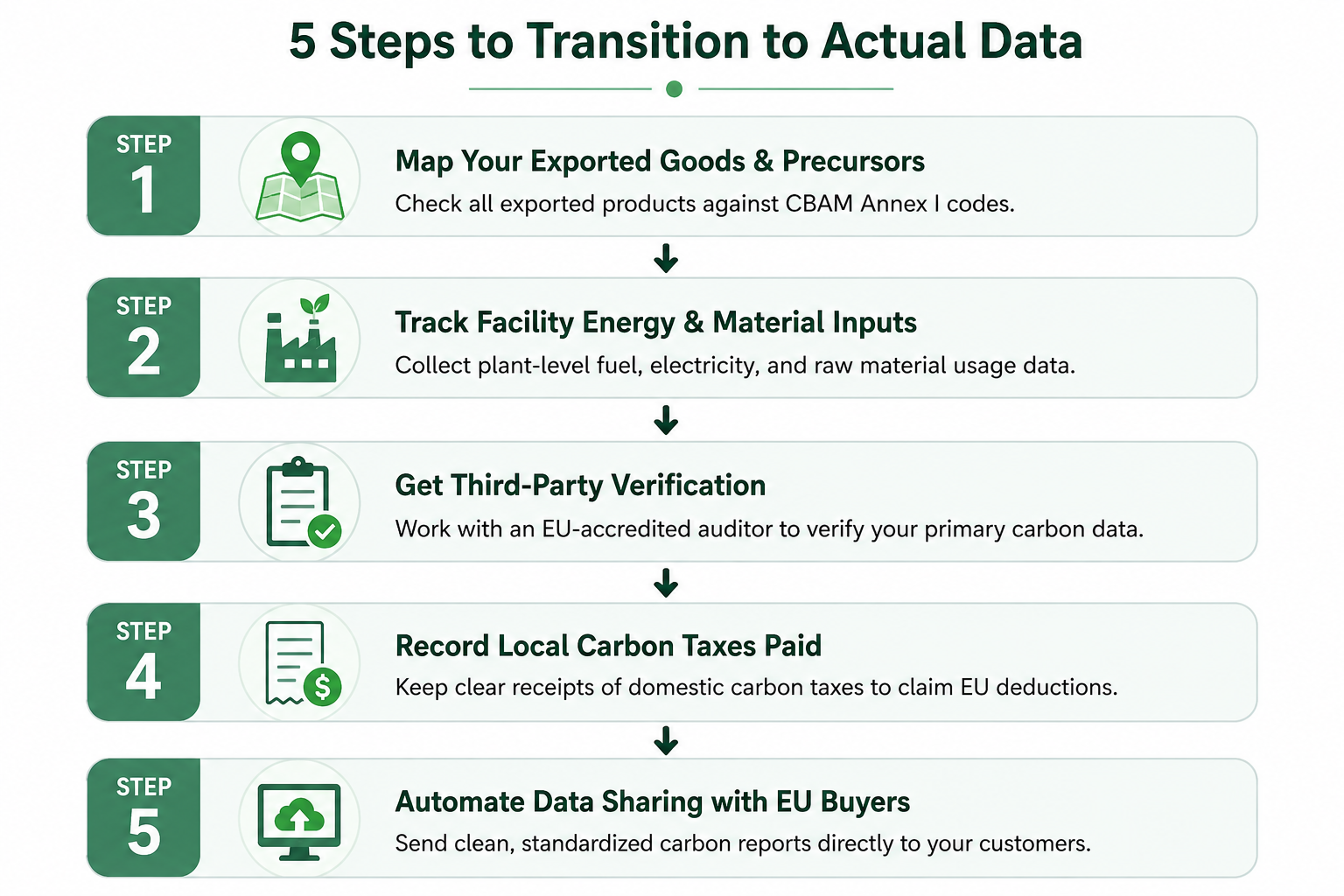
5 Practical Steps to Stop Paying Penalty Taxes
Moving from estimated defaults to verified primary data doesn’t have to be complicated:
How The Sustainability Cloud Helps You Win
Managing supplier carbon data, plant emissions, and auditor files on spreadsheets creates room for costly mistakes.
The Sustainability Cloud gives global exporters and EU importers an all-in-one software platform:
- Automated Carbon Accounting: Calculate installation emissions down to the exact product batch.
- Precursor Supply Chain Tracking: Collect and verify carbon data across your entire supplier network.
- Buyer Savings Modeling: Show EU customers instantly how much money they save by choosing your goods over competitors.
- Audit-Ready Declarations: Generate standardized CBAM files built directly for EU Commission portals.
Protect Your Margins in 2026
Relying on EU CBAM default values is designed to cost you money. By switching to verified actual emissions today, you protect your profits, lower your buyers’ tax burden, and keep your business competitive in Europe.
Want to explore deeper regulatory rules and updates?
- Read our guide on Navigating the EU CBAM Definitive Regime.
- Learn about technical guidelines in our breakdown of CBAM Technical Rules & Precursor Tracking.
Ready to calculate your actual CBAM savings?
Book a 1-on-1 Strategy Audit with the specialists at The Sustainability Cloud today.
FAQs