
THE SUSTAINABILITY CLOUD®
Simplify Carbon Market Readiness with Technology, Advisory, and End-to-End Compliance Support
Unlock India’s carbon economy in 5 easy steps!
A global leader in carbon credit development, supply, and sustainability consulting, we help Indian industries turn CCTS compliance into a measurable competitive edge.
Empowering companies to unlock India’s carbon economy









WHAT IS CCTS?
What is India’s Carbon Credit Trading Scheme (CCTS)?
India’s Carbon Credit Trading Scheme is the country’s first national compliance carbon market, notified in June 2023 under the Energy Conservation (Amendment) Act, 2022, governed by Bureau of Energy Efficiency (BEE)
Companies that perform better than their targets earn Carbon Credit Certificates (CCCs), which they can sell on designated exchanges. Each certificate represents one tonne of CO₂ equivalent reduced or removed.
100% Auditability & Traceability:
Maintain digital audit trails for emissions data, approvals, calculations, and reporting workflows to improve transparency and verification readiness.
100% Automated Data Collection
Integrate data from ERP systems, plant operations, IoT devices, utility bills, and existing reporting systems to reduce manual effort and data inconsistencies.
80+ Emissions & Carbon KPI Tracking
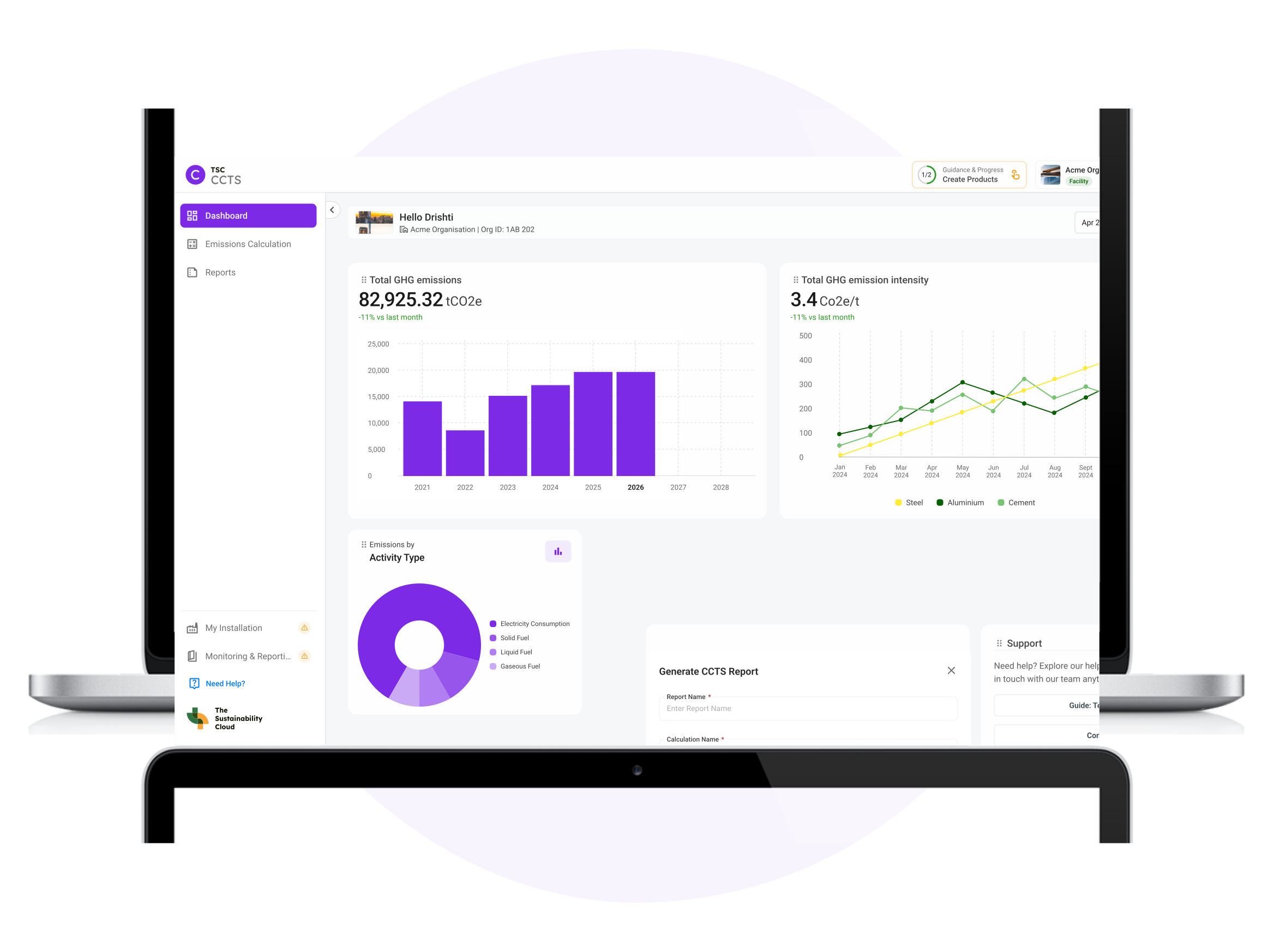
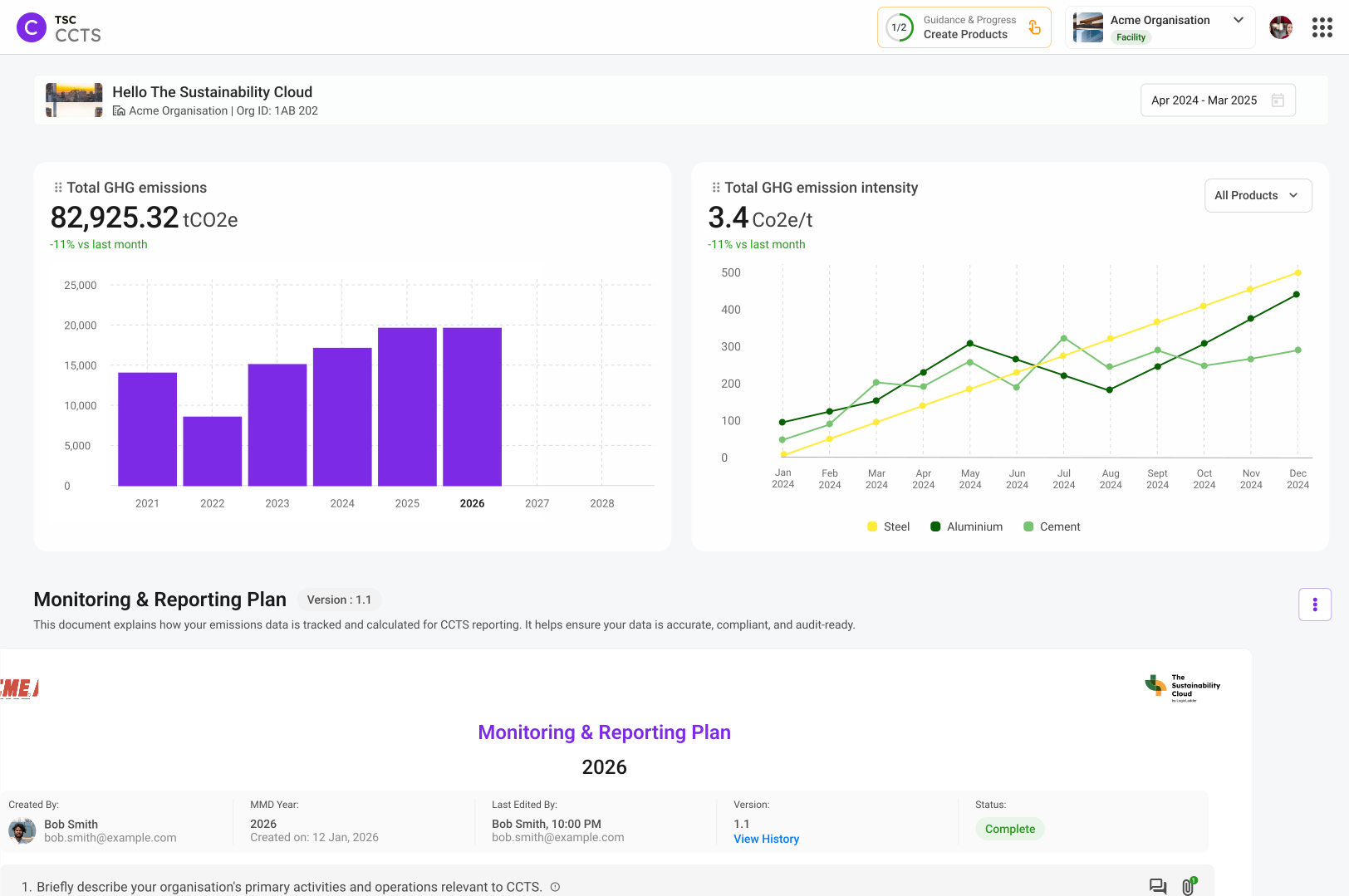
Track carbon emissions, energy consumption, carbon intensity trends, reduction targets, and sustainability performance through interactive dashboards.
100% Collaboration across teams
Enable seamless collaboration between sustainability, operations, EHS, compliance, procurement, finance, and leadership teams through centralized workflows.
End-to-End CCTS Solutions for Enterprises
1. Carbon Accounting
Measure Scope 1, Scope 2, and Scope 3 emissions using globally aligned methodologies and auditable workflows.
2. GHG Intensity Tracking
Monitor emission intensity across facilities, production units, suppliers, and operations to prepare for sectoral targets under CCTS.
3. MRV Support
Strengthen Monitoring, Reporting, and Verification (MRV) processes through centralized documentation, validation workflows, and traceable data management.
4. Decarbonisation Planning
Identify high-impact emission hotspots and build practical reduction strategies aligned with operational realities.
5. Carbon Credit Advisory
Explore opportunities for carbon credit development, generation, supply, and participation within evolving domestic and global carbon markets.
5. Sustainability Consulting
Access climate experts for reporting support, compliance readiness, emissions strategy, and sustainability transformation initiatives.
Is your sector covered?
Body: Currently, 461 obligated entities across nine energy-intensive industries are mandated to comply. More sectors will be added in future phases.
Sector: Aluminium · Cement · Iron & Steel · Fertilizers · Petroleum Refining · Petrochemicals ·
Textiles · Pulp & Paper · Chlor-Alkali
Note below: Not on the list yet? Non-obligated entities can still register eligible GHG reduction projects through the CCTS voluntary offset mechanism and earn CCCs as carbon credit suppliers.