

Understanding the UK CBAM 2027 policy is essential for global exporters preparing for upcoming carbon-pricing regulations. While much of the global trade dialogue has focused on the European Union’s CBAM, the UK is building a distinct post-import tax regime tailored to its own market. For global exporters – especially those in India, China, Turkey, and the Middle East – understanding the operational and compliance nuances between the EU and UK regimes is crucial to protecting profit margins and avoiding supply chain disruption.
This comprehensive guide breaks down what the UK CBAM is, key implementation dates, covered sectors, major differences from the EU CBAM, and actionable steps to prepare.
1.What Is the UK CBAM 2027 Regulation?
The UK Carbon Border Adjustment Mechanism (CBAM) is a carbon-pricing policy designed to prevent “carbon leakage.” Carbon leakage occurs when businesses move production to countries with weaker environmental policies or when UK buyers replace domestic products with cheaper, high-carbon imports.
How it works: The UK CBAM charges importers the difference between the explicit carbon price paid in the origin country (where the goods were produced) and the UK’s own carbon price under the UK Emissions Trading Scheme (UK ETS).
Unlike a flat tariff, this charge reflects the actual carbon intensity embedded in the imported product. All exporters must evaluate their supply chain to comply with the UK CBAM 2027 guidelines.
2. UK CBAM 2027 Timeline & Important Dates
The legal framework for the policy was established under the Finance Act 2026. Exporters and UK importers should note the following critical milestones:
- 1 January 2027: UK CBAM goes live; the first 12-month accounting period begins (1 Jan 2027 – 31 Dec 2027).
- 31 January 2028: Registration deadline for businesses that become liable in year one.
- 31 May 2028: First returns and financial payments are due to HM Revenue & Customs (HMRC).
- From 2028 Onward: The reporting cycle transitions from annual to a quarterly reporting framework.
3. UK CBAM 2027 Covered Sectors: Who Is Affected?
Following extensive public consultations, the UK government refined the scope of goods subject to the tax at launch.
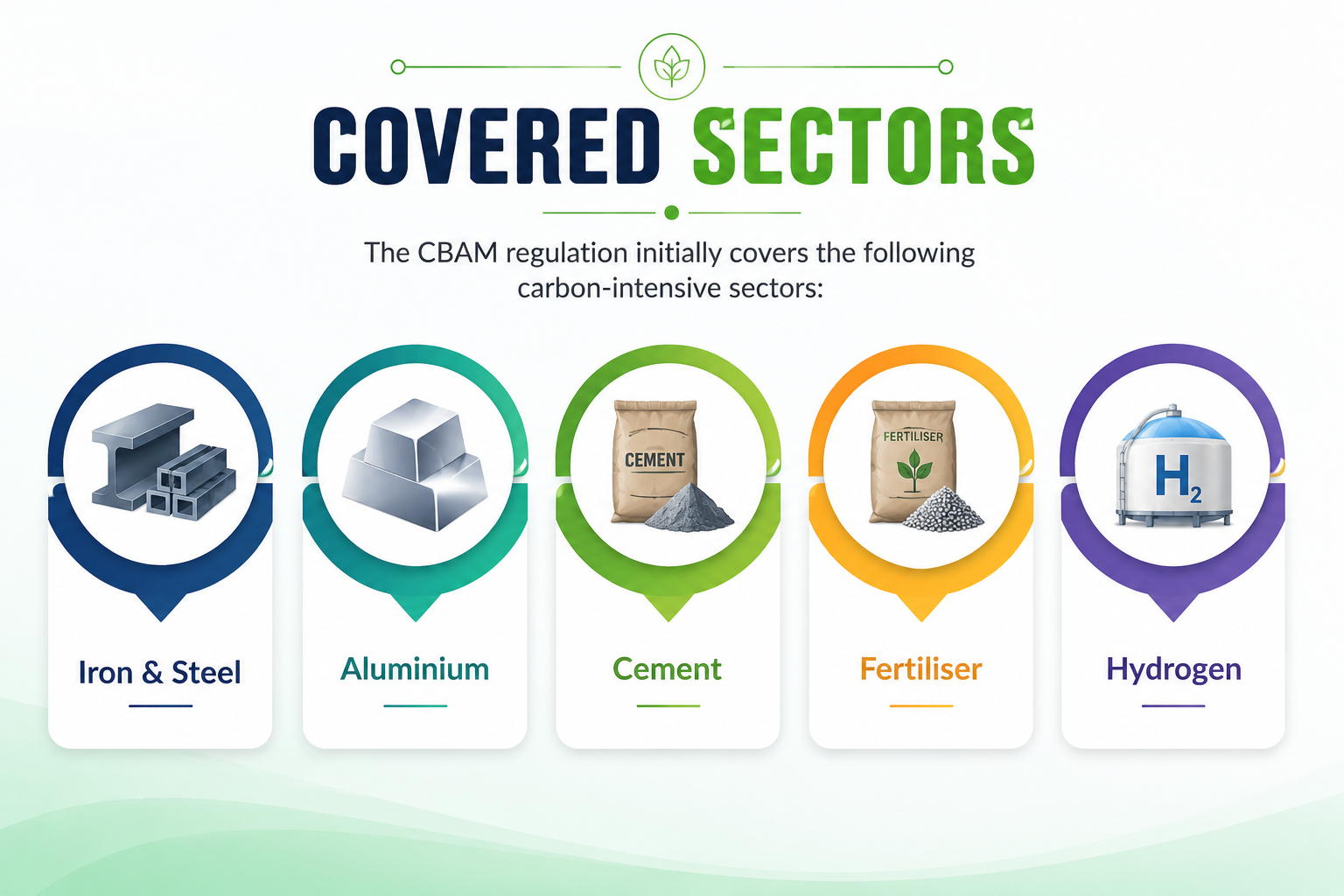
Important Scope Note: While earlier proposals considered including Glass and Ceramics, both were dropped following industry feedback. However, because the EU CBAM continues to cover glass and ceramics, multi-market exporters will need to maintain two distinct compliance frameworks. Under the UK CBAM 2027 scope, five primary carbon-intensive sectors are initially targeted.
4. Key Differences: UK CBAM 2027 vs. EU CBAM
It is a common misconception that the UK CBAM is merely a replica of Brussels’ playbook. In reality, their enforcement models, emissions scopes, and administration differ significantly:
| Feature | EU CBAM | UK CBAM |
| Go-Live Status | Active (Definitive phase live since Jan 2026) | Launching 1 January 2027 |
| Enforcement Model | Customs-Gated: Importers require Authorized Declarant status to clear shipments at the border. | Tax Compliance: Enforced post-import by HMRC via registration, self-assessment, and audits. |
| Emissions Scope | Scope 1 & Scope 2 (Indirect electricity emissions counted for select sectors like cement/fertiliser). | Scope 1 only at launch; Scope 2 (indirect electricity) delayed until 2029 at the earliest. |
| Payment Mechanism | Purchase and surrender of CBAM Certificates tied to EU ETS prices. | Direct tax payment made directly to HMRC based on UK sector rates. |
| Scope Exclusions | Includes Glass, Ceramics, and Electricity. | Excludes Glass, Ceramics, and Electricity at launch. |
💡 Exporter Pro-Tip:
Managing overlapping reporting requirements for both EU and UK markets can quickly overwhelm internal compliance teams. Using automated reporting software like TSC CBAM Exporter allows global suppliers to streamline data collection, map accurate CN/HS codes, and generate compliant quarterly emissions declarations for overseas buyers with minimal manual effort.
5. What This Means for Non-UK Exporters
For international manufacturers already tracking data for the EU CBAM, that data is not automatically portable to the UK.
- Different Calculation Rules: Emission factors, verification standards, and reporting templates vary between the EU and UK regulatory systems.
- Scope 1 Focus (2027–2028): Because the UK is initially focusing only on direct (Scope 1) emissions, early calculations will centre heavily on facility-level fuel consumption rather than electricity grids until 2029.
- Registration Crunch: UK importers must register by 31 January 2028. Exporters who provide verified, UK-compliant product-level carbon data early will hold a significant competitive advantage over non-compliant peers.
6. Practical Action Plan for Businesses
To navigate the upcoming transition smoothly, manufacturing and trade compliance teams should take the following steps today:
- Audit Emissions Data by Market: Separate your product emissions accounting pipelines into EU-compliant and UK-compliant datasets.
- Establish Direct Scope 1 Metrics: Focus on measuring direct emissions from manufacturing furnaces, chemical processes, and fuel usage on-site.
- Engage UK Import Partners: Coordinate with your UK-based buyers to ensure your data alignment matches HMRC’s upcoming reporting formats before Q4 2027.
- Implement Integrated ESG/CBAM Software: Utilise carbon accounting platforms designed to support multi-jurisdictional frameworks (both EU and UK CBAM) seamlessly.
- Ensure your reporting aligns with the official UK CBAM 2027 tax structure.
Final Thoughts for Global Suppliers
The upcoming UK CBAM regulations mean that tracking embedded carbon is no longer optional—it is a core requirement for staying competitive in Western markets. Exporters who proactively establish robust carbon accounting pipelines will safeguard their profit margins and avoid trade friction.
To streamline your compliance journey, explore how TSC CBAM Exporter can help automate your embedded emissions calculations and deliver seamless compliance reports to your UK and EU clients.
FAQs