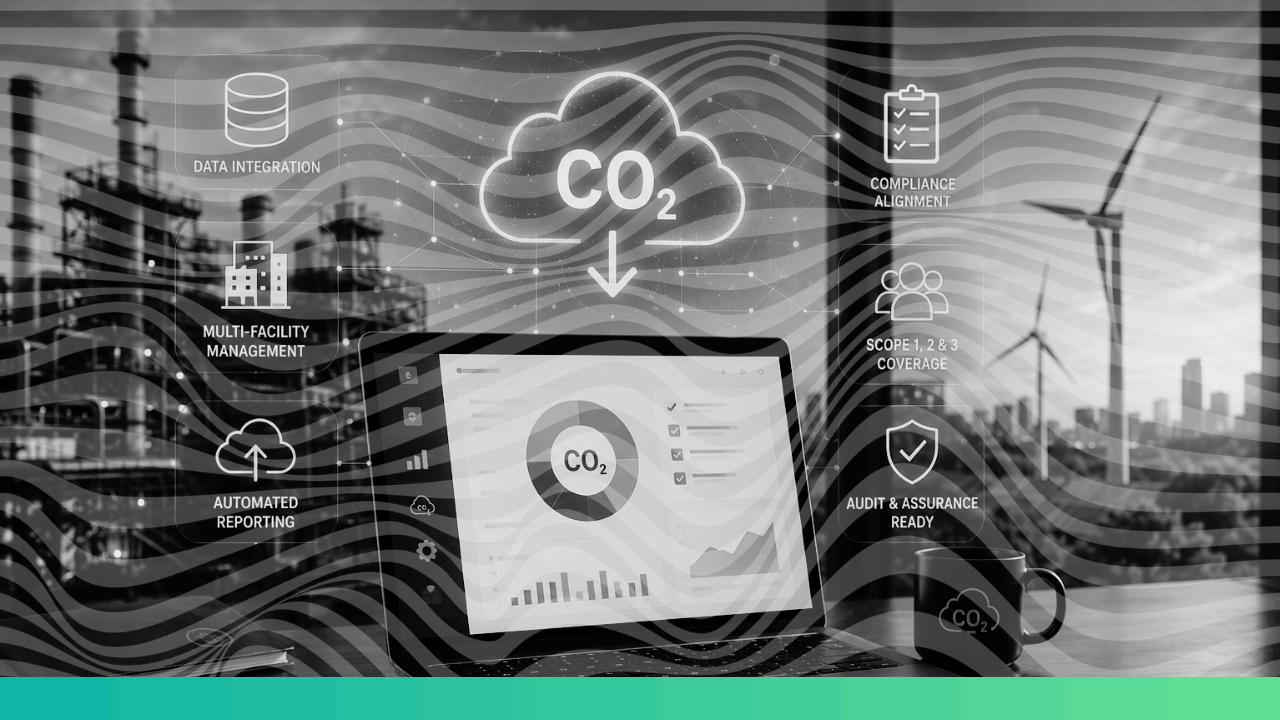
Finding a reliable method for CBAM reporting steel compliance is now a priority as India’s $3.5 billion steel export market to Europe faces an existential turning point under the EU’s CBAM regulations.
Exporters who rely on manual tracking or default emissions values risk a catastrophic €250- €300 per ton penalty.
As the largest supplier of steel and iron to the EU market, Indian steel exporters are bound to face higher costs as ESG and CBAM regulations tighten. Though the hit to the industry’s margins is imminent, sustainability teams can still do a lot to avoid buying CBAM certificates and to report with greater precision.
To start with, choose a CBAM reporting tool for steel exporters in India that can automate emissions reporting via expert-verified MRV (monitoring, reporting, verification) platforms. Let’s see which automation features CBAM compliance software for Indian exporters must have to avoid avoidable manual work.
4 phases to automate your CBAM reporting steel process
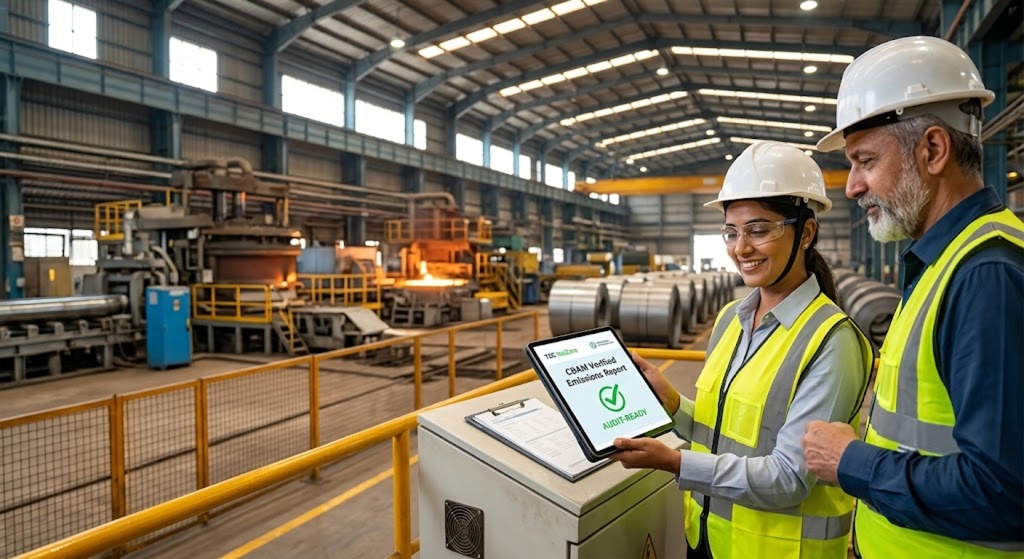
We’ve created a phase-by-phase plan to help automate your CBAM reporting tool for steel exporters in India:
Phase 1 – Establish your system boundaries and product logic
The first step is to run a comprehensive audit of your export portfolio. An automation-friendly CBAM compliance software for Indian exporters must map customs tariff combined nomenclature (CN) codes to specific steel product categories. This stops dependency on compliance teams to flag shipments manually. The software should automatically scan outgoing bills of lading and mention which products fall under CBAM jurisdiction.
Once this is set up, start isolating how you track a smaller production channel. Your chosen software must be able to segment emissions by different metallurgical routes. This accounts for all stages, including downstream reheating, rolling, and coating.
Phase 2 – Integrate live operations and fuel inputs
Next, do connect allocations for energy consumption to production records. Move away from typically inaccurate plant-wide averaging. Your carbon accounting software must instantly merge with ERPs and IoT utility meters. This lets your system get categorical data around coking coal, natural gas, and more. It’s even better to allocate those energy inputs to different production lines and product batches in real time.
- Tracking raw material precursors like iron ore, pellets, and scrap can be hard.
- Using cloud-based vendor portals can automate this tracking.
- Choose platforms with repeatable templates to request certified emissions data.
- Link all categories of emissions to your internal inventory ledger.
Phase 3 – Lock in your CBAM-embedded emissions calculation and audit trails
Once your data pipelines are connected, the software should automate your CBAM-embedded emissions calculation by applying the exact mathematical frameworks dictated by EU regulations
Hardcoding a verified CBAM-embedded calculations method into your tracking system can remove human error and emissions variance in reporting quarters. In short, the CBAM reporting tool must instantly convert raw flux and power inputs into CBAM compliant tCO2e-per-ton metrics.
- Make all emissions numbers defensible with clearly documented evidence.
- Set up automated indexing and storage of CEMS logs and supplier declarations.
- Streamline verification for 3rd parties to avoid additional queries.
Phase 4 – Enable importer-ready reporting and final stress testing
Lastly, you should attempt to deploy test reports before EU importers put pressure and start scouting for new Indian steel supplier contracts. Keep in mind that European steel buyers need to feed your Scope 1, 2, and 3 emissions data into EU CBAM importer software systems. This calls for your report to be data-ready so EU buyers can conveniently process compliance steps.
Consider treating the rest of 2026 and early 2027 as an operational test. Use a CBAM reporting platform to run parallel test runs with actual production data. This can iron out any bottlenecks in your reports and also in your software usage.
It’s much wiser to secure these important supply chain relationships before the high-stakes phase of CBAM certificate purchasing and formal verification deadlines.
Choose The Sustainability Cloud (TSC) for automating CBAM emissions reporting
Here’s how The Sustainability Cloud’s products fit well into each of the 4 phases of your CBAM carbon accounting process for Indian steel mills.
TSC NetZero replaces time-intensive manual categorization by automatically cross-referencing your steel product catalog with EU CN codes. The platform’s framework lets you map varying production routes, ranging from sintered ore production to blast furnace setups. Overall, a precise boundary segregation relieves importer-exporter compliance teams from tagging individual shipments.
Beyond this, TSC Energy moves your operations completely in the opposite direction of intentionally strict default values. Use data connectors to link to plant-floor IoT utility meters and your internal ERP. As most steel exporters can have complicated upstream footprints, TSC’s dedicated Scope 3 Value Chain software allows your sustainability and ESG reporting teams to directly coordinate with raw material suppliers. This brings in verified data for ferroalloys and other parameters without excessive manual effort.
Most importantly, the platform’s core intent is to substantially reduce the risk of double-counting or unit-conversion slip-ups. This is done by hardcoding the exact EU-verified CBAM-embedded emissions calculation method directly into its central engine. And as regulations keep getting stricter in 2027, the platform continuously builds an updated, tamper-proof data ledger. This guarantees compliance with the 5% materiality thresholds set by accredited EU CBAM verifiers.
Conclusion: Securing your Steel Export Future under CBAM
Successfully navigating the European Union’s transitional rules requires moving away from the operational vulnerability of manual spreadsheets and inaccurate default country-level averages.
Relying on outdated data reporting methods is no longer a viable compliance strategy. As EU buyers tighten their supply chain requirements, possessing an end-to-end audit trail is what will separate market leaders from those facing costly border penalties.

FAQs