THE SUSTAINABILITY CLOUD®

Are you a

plant owner in Delhi NCR? Your plant is at compliance risk! 

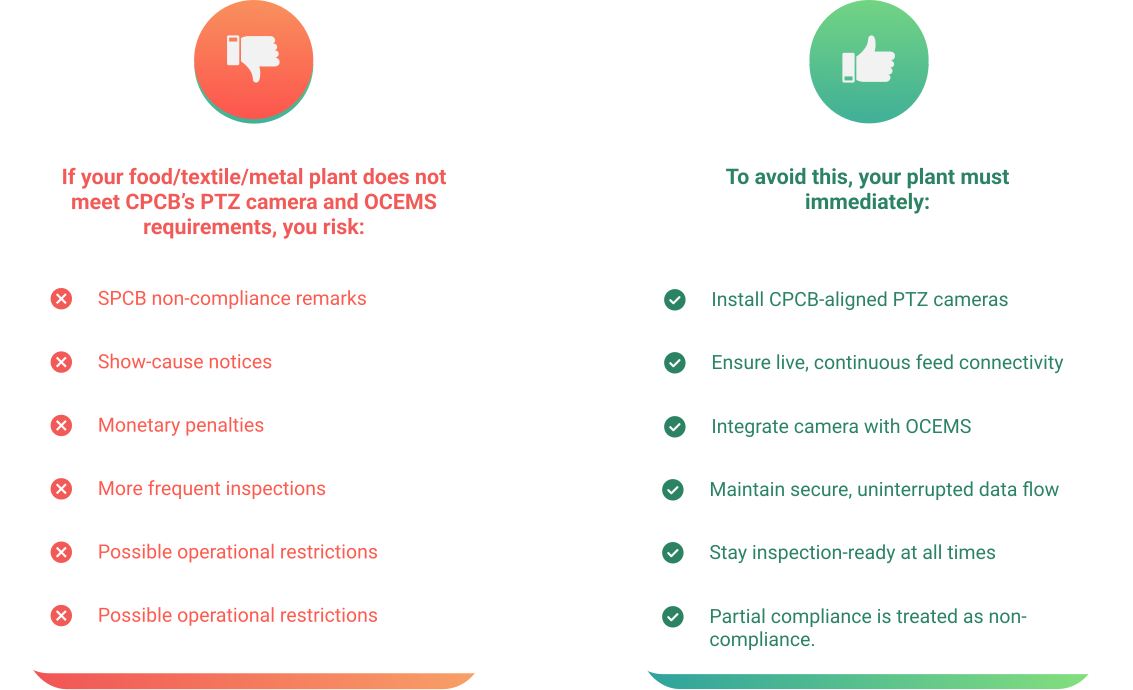
CPCB has issued a notification directing all metal/food/textile industries in Delhi-NCR to install OCEMS systems and PTZ cameras.

You must upgrade to the new OCEMS portal—act now to avoid penalties and ensure ongoing operations.

Quick Facts About the New CPCB Notification You Should Know

1

CPCB has issued a mandatory directive 

Industries in NCR-Delhi must install OCEMS with PTZ cameras and connect them to CPCB servers for real-time monitoring

2

What must be installed? 

OCEMS for emissions monitoring PTZ cameras to visually monitor stacks and operations Continuous live data flow to CPCB/SPCB servers

3

Deadline is fixed

All installation and connectivity must be completed by 31 December 2025

4

This applies immediately

The directive is enforceable. SPCBs can inspect and verify compliance at any time. 

5

Non-compliance has consequences

Delays can lead to inspections, penalties, closure directions, or operational disruption

Now what? We are here with the solution!
Now what? We are here with the solution!

TSC Enviro Helps Industries to meet new CPCB Requirements for PTZ and OCEMS Analyzers

Seamless PTZ Camera Connectivity to CPCB Portal
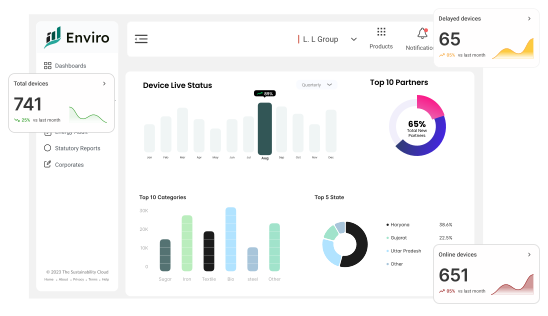
OCEMS-aligned cloud monitoring

Support during SPCB inspections and audits

Built for Regulatory Compliance. Not Generic Monitoring

Stay ahead of regulations, streamline your ESG management and reporting now

FAQs

OCEMS/CEMS Regulations 2025

The Central Pollution Control Board (CPCB) has defined two key compliance deadlines for industries operating in the Delhi-NCR region:

Registration Deadline: All air-polluting industries must register on the new CPCB CEMS portal by October 15, 2025.

Installation Deadline: Medium and large-scale industries in the Textile, Metal, and Food Processing sectors must complete the installation of CEMS and PTZ cameras by December 31, 2025.

Although the regulation applies to 17 categories of highly polluting industries, the 2025 enforcement focus includes:
Textile & Food Processing Units: Industries with boiler capacity ≥ 10 TPH or those using notified fuels.
Metal Processing Units: Induction Furnaces and Electric Arc Furnaces using met-coke or low-sulfur oil.
Red Category Industries: All Red Category units in Delhi-NCR, regardless of size, must provide continuous emissions data to the Delhi Pollution Control Committee (DPCC).

– All Indian and imported CEMS equipment must be certified by CSIR–National Physical Laboratory (NPL).
– Certification must be under the NPL India Certification Scheme (NPLI-CS).
– Equipment without valid NPL certification will not be accepted for official compliance or reporting.

Monitoring parameters vary by industry type but generally include:
Air Emissions: Particulate Matter (PM), Sulphur Dioxide (SO₂), Nitrogen Oxides (NOₓ)
Effluent Monitoring (where applicable): pH, Total Suspended Solids (TSS), Chemical Oxygen Demand (COD), Biological Oxygen Demand (BOD), and Flow
Visual Monitoring: Installation of industrial-grade PTZ cameras for real-time monitoring of:
Stack port-holes
Furnace charging/feeding areas
Fume extraction and pollution control systems

Real-Time Data Transfer: Emissions and effluent data must be transmitted directly and automatically to CPCB and DPCC servers.
Data Availability: A minimum of 85% data uptime per month is mandatory.
Calibration Requirements: Automatic zero and span calibration must be performed as per the revised July 2025 CPCB calibration protocols.

Non-compliance is strictly enforced in the Delhi-NCR region due to severe air quality concerns. Failure to comply by December 31, 2025 may result in:
Closure notices issued under the Air (Prevention and Control of Pollution) Act, 1981
Heavy Environmental Compensation (EC) penalties
Suspension or withdrawal of Consent to Operate (CTO)

Detailed technical specifications for sensors, data loggers, and camera placement can be found on the Official CPCB OCEMS Portal

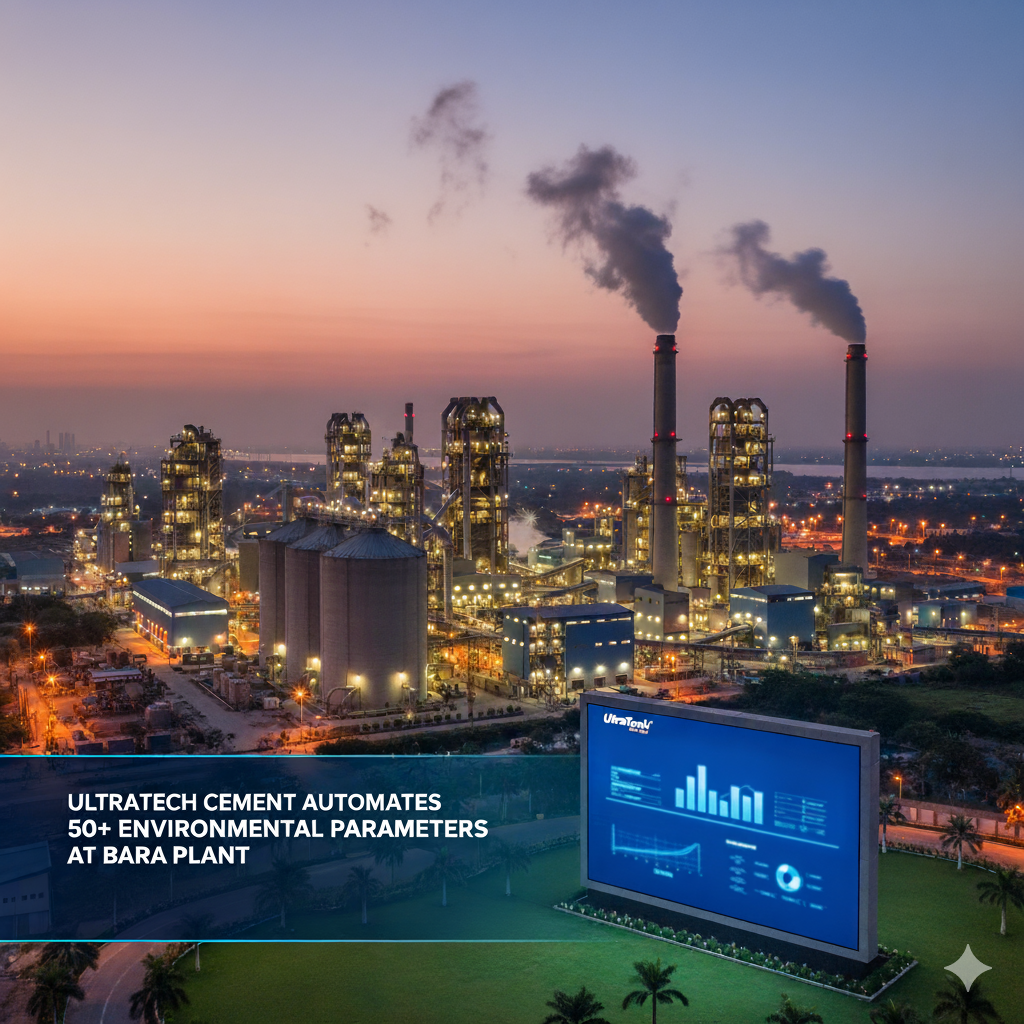
Case Study

As India’s largest cement producer, UltraTech Cement has always prioritised sustainability and compliance as integral to our operations. The digitisation of our environmental monitoring framework at Bara Cement plant by Sustainability Cloud’s TSC Enviro software has given us real-time visibility, precision, and control, ensuring we remain fully compliant while optimising efficiency. This step strengthens our role as an industry leader and aligns with India’s broader vision of sustainable industrial growth.

Ultratech Cement

..