
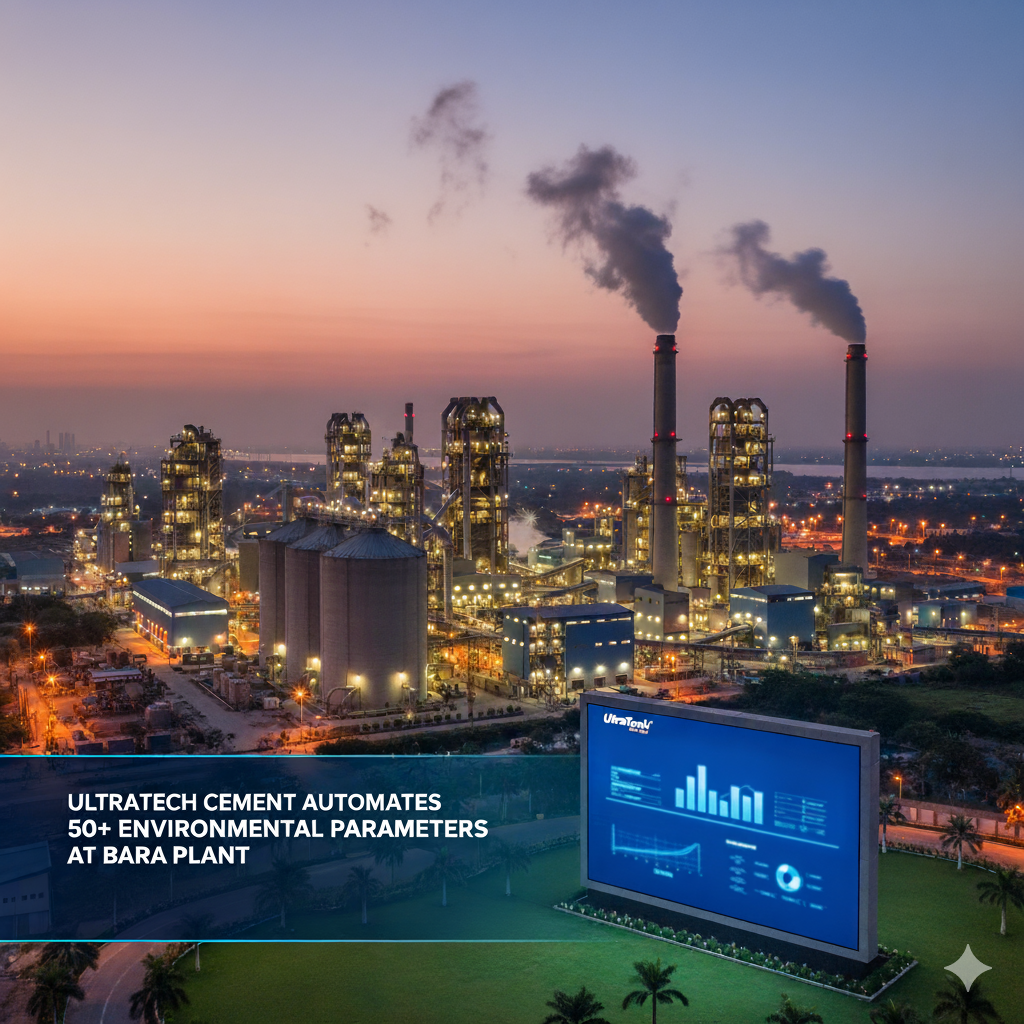
UltraTech Cement Automates 50+ Environmental Parameters at Bara Plant
UltraTech digitised monitoring and reporting its environmental emissions, saving time while ensuring regulatory precision at its Bara, Uttar Pradesh plant.
Industry: Cement Manufacturing
Company size: 10,001+ employees
TSC Solution used: TSC Enviro
Digitising Environmental Monitoring of a plant at Bara, Uttar Pradesh
At its Bara Cement Works in Uttar Pradesh, UltraTech recognised the growing need to digitise its environmental monitoring systems. Despite having advanced infrastructure, the plant still relied on fragmented, semi-manual processes to track emissions and effluent quality. This approach made real-time analysis difficult and slowed compliance reporting, especially as CPCB guidelines demanded continuous monitoring with greater transparency. To address this, UltraTech adopted TSC Enviro to centralise data collection, automate reporting, and gain sharper insights into environmental performance across key parameters.
From Manual Logs to Automated Monitoring
Previously, the process of tracking emissions included collecting readings manually from multiple devices, consolidating them into spreadsheets, and then preparing reports for regulators. This process not only consumed days of staff time but also left room for small errors that could cascade into compliance risks. Today, CEMS, EQMS, AAQMS, and noise monitoring systems feed directly into a centralised dashboard. Automated submissions ensure that data is not just accurate but also instantly available, streamlining UltraTech’s engagement with CPCB and SPCB requirements.
Real-Time Compliance and Proactive Interventions
For a cement plant of UltraTech’s scale, even minor deviations in particulate matter levels can have significant environmental and reputational implications. Previously, deviations were often detected only during periodic reviews. With real-time anomaly detection now in place by TSC Enviro, the plant team can intervene immediately. For example, adjusting kiln operations or servicing bag filters before breaches occur. This shift has moved compliance management from reactive corrections to proactive prevention.
Centralised Visibility for Cross-Functional Teams
Environmental monitoring is not just a regulatory function, it influences plant operations, maintenance scheduling, and sustainability strategy. UltraTech’s sustainability, operations, and compliance teams now rely on a unified dashboard.
For instance, a spike in effluent discharge can be traced back to its source immediately, allowing maintenance teams to address the root cause. Leadership, in turn, can use historical trend reports to guide long-term planning.
Turning Compliance into Cost Efficiency
Digitisation has also delivered tangible cost savings. By cutting down over 48 hours of manual reporting effort each month, UltraTech freed up more than 500 hours annually for its teams that is now invested in efficiency projects and sustainability planning. The system also reduced reliance on external manpower, optimised resource allocation, and helped the company achieve annual savings of more than ₹40 lakhs. What was once seen as a compliance cost has now become a driver of operational efficiency.
Setting an Industry Benchmark
As India’s largest cement producer, UltraTech Cement has always set benchmarks in operational excellence. By digitising environmental monitoring at Bara, the company has demonstrated how compliance can be transformed into a catalyst for efficiency, accountability, and leadership in sustainability. This integration not only strengthens UltraTech’s existing ESG commitments but also positions it to lead the sector in aligning with India’s Net Zero ambitions.
As India’s largest cement producer, UltraTech Cement has always prioritised sustainability and compliance as integral to our operations. The digitisation of our environmental monitoring framework at Bara Cement plant by Sustainability Cloud’s TSC Enviro software has given us real-time visibility, precision, and control, ensuring we remain fully compliant while optimising efficiency. This step strengthens our role as an industry leader and aligns with India’s broader vision of sustainable industrial growth.
Ultratech Cement
..